
Franklin County Arrest to Court Records
A Franklin County arrest can start with several local agencies, including the Franklin County Sheriff's Department, Brookville Police Department, Batesville Police Department, Indiana State Police, Indiana Conservation Officers, Indiana State Excise Police, and town officers in Laurel or Oldenburg. The person is booked through the Franklin County Security Center when local custody is used. The sheriff's current inmate offense list may show booking number, name, statute, offense, court code, offense code, and class. That jail list is useful, but it is not the final court record.
The next step is prosecutor review. The Franklin County Prosecuting Attorney, Chris Huerkamp, represents the State of Indiana in felony and misdemeanor prosecutions from crimes committed in Franklin County. The office also handles traffic and infraction violations and juvenile matters where the law allows. Once charges are filed, the public court case is searched through Indiana MyCase for non-confidential cases. Custody and booking details belong on Franklin County jail inmate records, while booking photos and photo limits belong on the Franklin County jail mugshots page.
The key point is timing. The arrest creates jail and law-enforcement records. The filed charge creates the court case. Those two records may match, but they do not have to match word for word.
Find Franklin County Court Records
Franklin County court records after an arrest are usually searched by name or cause number in MyCase. The Franklin County Clerk page directs users to case search for non-confidential Indiana Odyssey cases, and the Indiana Judicial Branch Franklin County courts page links to court case search. If a filing, order, or image is not available online, the Indiana Judicial Branch tells users to contact the local clerk where the case is heard.
The MyCase portal is most useful when a jail roster entry gives an exact name spelling or statute clue. The sheriff PDF may show a compact offense line, but the court case can show the cause number, the filed charge level, hearings, bond orders, amended counts, dismissals, and disposition. Use the court record for the case history. Use the jail record for current custody status.
| Field Label | Type | Required | Options / Format Notes |
|---|---|---|---|
| Name / party name | Text | Optional | Search by defendant name; use the exact spelling from the jail roster when possible. |
| Case number / cause number | Text | Optional | Best when the number appears on court, bond, or jail paperwork. |
| Citation number | Text | Optional | Useful for traffic and infraction matters. |
| Attorney | Text | Optional | Can locate cases tied to a listed attorney. |
| Court/county filter | Filter | Optional | Select Franklin County or the relevant court when the portal offers that limit. |
| Case type/status/date filters | Filters | Optional | Options vary by search mode because the portal is dynamic. |
The Indiana court public-records page also explains that some documents and filings are available through MyCase at no cost. When a document is not posted, the local clerk is the copy source.
Franklin County Arrest Filing Path
The basic sequence is arrest, booking, prosecutor review, charging document, first appearance, then case events. A booking entry may say "Warrant Arrest" or list an Indiana statute, but the prosecutor may later file a different count, add a count, reduce a count, or decline a count. That is why Franklin County court records after a jail arrest should be checked in MyCase after checking the sheriff list.
- Use the sheriff offense list to capture the person's exact name, booking number, offense line, and statute if shown.
- Search MyCase by name in Franklin County. For common names, narrow by case date or use a cause number if known.
- Open the criminal, traffic, or infraction case filed after the arrest date.
- Compare jail offenses with filed court charges, including charge level, status, and court events.
- Contact the Franklin County Clerk for court documents that are not available online.
- Contact the prosecutor for questions about filed charges, victim assistance, or the prosecution role.
The Franklin County Clerk is Ruth R. Rowlett at 459 Main Street, Brookville, IN 47012. The clerk can be reached at 765-647-5111 or clerk@franklincounty.in.gov. Office hours are Monday through Friday, 8:30 a.m. to 4:00 p.m., with a lunch closure from noon to 1:00 p.m. The prosecutor is Chris Huerkamp at 459 Main St, Brookville, IN 47012, phone 765-647-3589, email prosecutor@franklincounty.in.gov. The prosecutor's office is open Monday through Friday, 8:30 a.m. to noon and 1:00 to 4:00 p.m.
The official MyCase court search is the public portal used for many Franklin County case lookups.
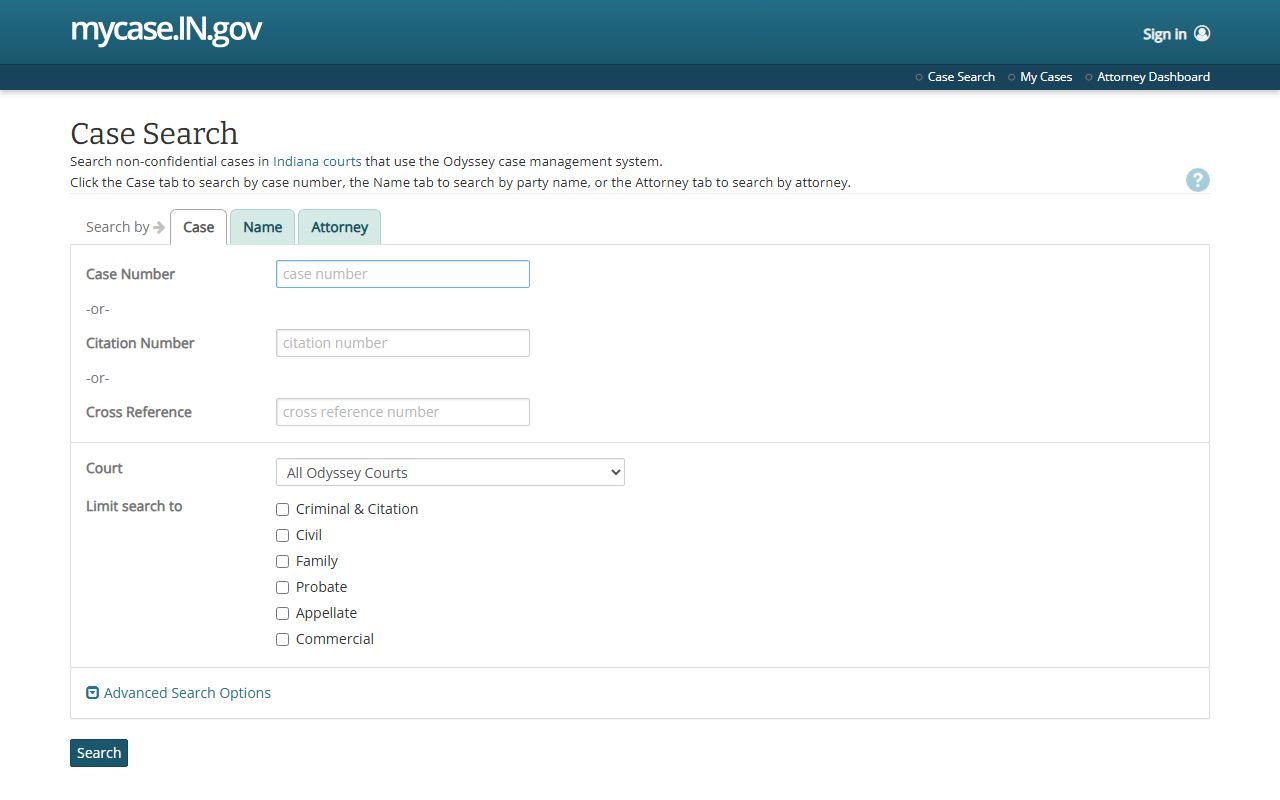
Use the portal to verify filed court charges instead of assuming the jail offense list is the final legal charge.
Charging Documents After Arrest
A charging document is the paper that starts or frames the criminal case. In Franklin County, the prosecutor's office is the filing authority for felony and misdemeanor prosecutions, traffic and state-law infractions, and juvenile violations where public access rules allow. The prosecutor also convenes and supervises grand jury proceedings, so an indictment can be part of the path in the right case.
| Document | Who Uses It | What It Does | Franklin County Context |
|---|---|---|---|
| Complaint | Officer or prosecutor | States the alleged offense and facts that support filing. | Often tied to the arrest and initial case start. |
| Information | Prosecutor | Formally charges the person without a grand jury indictment. | Common for many criminal filings handled by the county prosecutor. |
| Indictment | Grand jury | Charges a case after grand jury review. | The prosecutor supervises grand jury proceedings when used. |
Do not treat these words as proof of guilt. They describe how the accusation entered the court system. The outcome is found later in the case events, plea, trial result, dismissal, or sentencing entry.
Franklin County Charge Status
Charge status matters because a court record can change after the first filing. A charge may remain pending while hearings continue. It may be amended to correct or change the legal count. It may be reduced in severity, dismissed, or resolved by conviction. Juvenile cases and some sealed records may not show the same level of public detail.
| Status | Meaning in a Court Record | Why It Matters After Arrest |
|---|---|---|
| Pending | The case or charge is still active. | No final court outcome has been entered. |
| Amended | The prosecutor or court changed the charge language or count. | The filed court charge may differ from the jail offense line. |
| Reduced | The charge was lowered in severity. | The final count may be less serious than the booking entry. |
| Dismissed | The charge was ended by the court or prosecutor. | A dismissal is not a conviction. |
| Conviction | The case reached an adjudicated result by plea or verdict. | This is the outcome record, not the arrest itself. |
| Infraction | A civil or non-criminal traffic-style matter. | It can appear in court search but is not the same as a criminal conviction. |
Bond After Franklin County Arrest
Bond information can sit in both jail and court channels, so it should be verified before anyone acts on it. Franklin County publishes an arrests and bonds page stating that Level 3 and Level 4 felony cash or surety bonds may be made through a bondsman. For other bondable offenses, the sheriff's bond information says cash-only bonds are made to the Franklin County Security Center by schedule. Some charges may have time holds because of their nature.
| Bond Type | How It Works Locally | Record to Check |
|---|---|---|
| Cash-only bond | Used for bondable offenses outside the listed Level 3 and Level 4 cash/surety category. | Security Center and court order. |
| Cash/surety bond | Franklin County notes Level 3 and Level 4 felony cash/surety bonds may go through a bondsman. | Security Center, bondsman, and court case. |
| Time hold | Drug-related offenses carry an eight-hour hold; OWI release requires a .00 alcohol level. | Security Center custody status. |
| Other hold | A warrant, probation/parole violation, agency hold, or court hold can delay release. | Jail, clerk, and MyCase as applicable. |
Bond status is a practical reason to compare court records after arrest with the jail record. A person may appear bondable but still be held because of another case, warrant, detainer, or court order.
Warrants in Franklin County Records
No official Franklin County criminal active-warrant search portal was located in the sheriff pages reviewed. The sheriff site has a tax-warrant page, but that is not a criminal arrest-warrant lookup. The jail offense list did show many entries labeled "Warrant Arrest" with the code WARR, which means a warrant can be the reason for booking at the Franklin County Security Center.
To verify a warrant tied to a court case, search MyCase by name and review public case events or orders. For court-copy questions, contact the Franklin County Clerk. For custody or arrest-warrant questions, the sheriff's main phone is 765-647-4138. If the warrant may lead to arrest, legal advice should come from an attorney, not a public lookup result.
Note: Absence from the current inmate offense list does not prove that no Franklin County warrant exists.
Charges Versus Convictions
An arrest and a filed charge are not the same as a conviction. The sheriff roster may list the offense that led to custody. MyCase may show the charge the prosecutor filed. The conviction, if any, appears only after a plea, trial verdict, or other adjudicated outcome. That distinction is important for work, housing, licensing, and personal decisions, because a pending charge can later be dismissed, reduced, or resolved in a different way.
| Record Point | Charge | Conviction |
|---|---|---|
| Stage | An accusation filed in court after arrest review. | A final outcome by plea, verdict, or judgment. |
| Proof level | Based on probable cause or filing review. | Requires a legal finding or admitted guilt. |
| Can change? | Yes. It can be amended, reduced, or dismissed. | It can be appealed or later affected by record relief, but it is a final case result. |
| Best source | MyCase and clerk filings. | Final court disposition and sentencing entries. |
Sealed and Expunged Records
Indiana's expungement and sealing chapter, IC 35-38-9, governs eligible arrest, charge, conviction, and juvenile-delinquency record relief. A court order is the key event. A person should not assume that a dismissal, acquittal, or old case vanishes from every public system without a court order and agency processing.
| Issue | Sealed | Expunged |
|---|---|---|
| Public view | Access is limited or hidden from ordinary public search. | Eligible records receive statutory relief under the court order. |
| Who decides? | The court, under Indiana law. | The court, under Indiana law. |
| Scope | May affect court access, depending on the order. | May affect arrest, charge, conviction, or juvenile records if eligible. |
| Practical step | Use the clerk and court order to confirm what is restricted. | Do not rely on a website result as proof of relief. |
Indiana APRA also matters. IC 5-14-3-3 gives a right to inspect and copy public agency records unless an exception applies, while IC 5-14-3-4 lists confidential and discretionary limits. For arrest, summons, jailed-person, and law-enforcement information, IC 5-14-3-5 is the key public-access section.
Restricted Franklin County Court Records
Not every record tied to an arrest is public in the same way. Juvenile matters may be confidential or limited. Investigatory law-enforcement records can be restricted. Sealed cases, protected filings, and some personal data may not appear in public search. A public MyCase result can also omit document images, which sends the request back to the Franklin County Clerk.
Important: Franklin County Inmate Population is not a consumer reporting agency, and these records are not for FCRA-covered screening decisions.
For a complete case document, use the clerk. For why a charge was filed, use the prosecutor's office when the question fits that office's role. For current custody, call the Security Center. Keeping those channels separate avoids the common mistake of treating one jail roster line as the full court history.